
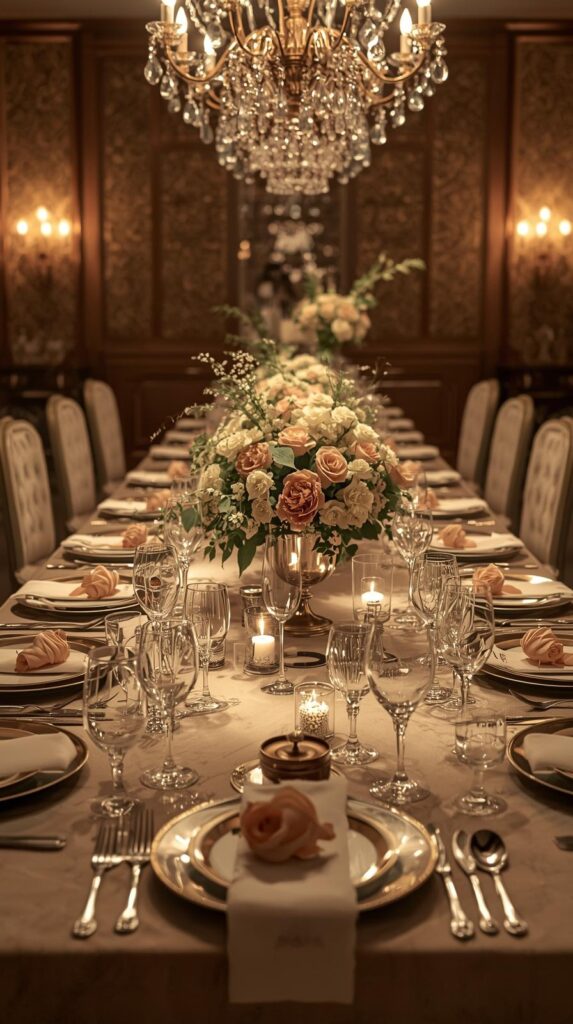
A beautifully arranged table immediately elevates any occasion. Crisp linens, polished cutlery, sparkling glassware and carefully positioned plates create an atmosphere of refinement before the first course is served.
More than decoration, a well-planned table setting helps guests understand how the meal will unfold. When the table eating etiquette is correct, every item has a purpose, every course flows naturally and your guests can dine with confidence.
The Three Essential Rules
If you remember only three principles of table manners, make them these:
- Forks go on the left of the plate, while knives and spoons go on the right.
- Cutlery is used from the outside in, following the order of the courses.
- Fork tines and spoon bowls face upwards, while knife blades point towards the plate.
These simple rules form the foundation of formal dining etiquette. Other details, such as using a matching cutlery set, are desirable but optional.
Position Cutlery Correctly
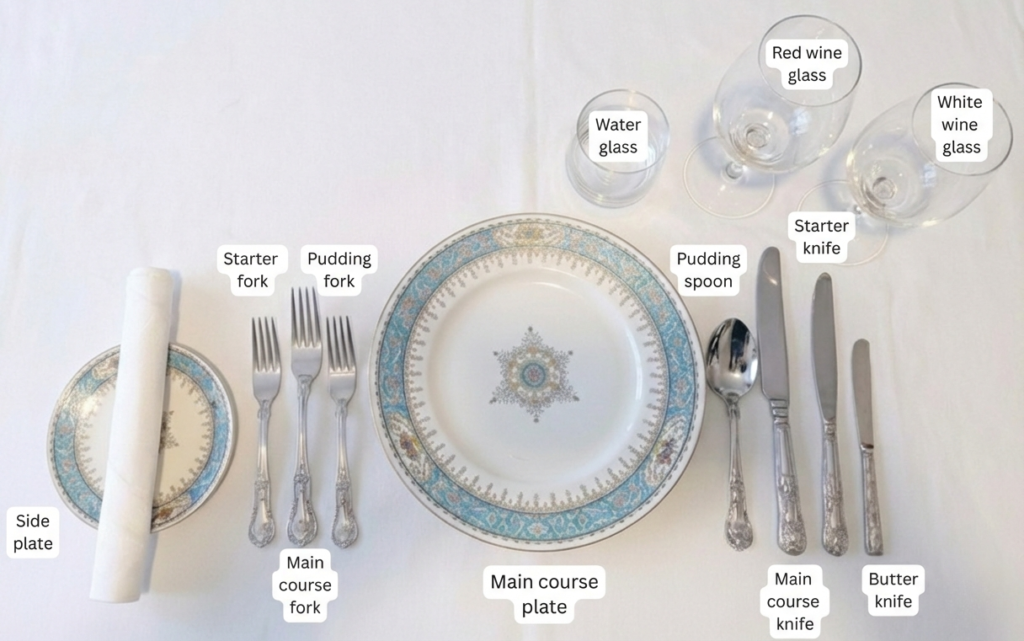
The traditional arrangement is simple: place forks to the left of the plate and knives and spoons to the right. This layout reflects the conventional British style of dining, in which the fork is held in the left hand and the knife or spoon in the right.
Knife blades should always face inwards, towards the plate. This small detail is one of the clearest signs of a carefully prepared table and gives the place setting a polished, welcoming appearance.
Forks are normally placed with their tines facing upwards. Spoons should also rest with their bowls facing upwards. In British and European dining, these details contribute to the visual harmony of the table.
What about a pudding fork?
A pudding fork remains on the left of the plate, even though many people will use it in their right hand when eating cake or another pudding. Cutlery is positioned according to its place in the setting, not according to the hand in which it will eventually be held.
There is nothing wrong with picking up the pudding fork with your right hand if that is more comfortable for you.
Work From Outside In
The most useful rule for arranging cutlery is to place it in the order in which it will be used. Guests then progress naturally from the outermost implement towards the plate.
For example, a three-course meal might include:
- A starter fork placed furthest to the left.
- A main-course fork positioned nearer to the plate.
- A main-course knife placed nearest to the plate on the right.
- A starter knife or soup spoon positioned further out, depending on the menu.
- A pudding fork and spoon placed according to the style of service you are following.
This arrangement removes uncertainty and allows guests to move through the meal without hesitation. If soup is served first, the soup spoon should be the outermost item on the right. If a starter requires a knife, the starter knife should be placed outside the main-course knife.
The rule is easy to remember: the earlier the course, the further away its cutlery should be from the plate.
Keep Pudding Cutlery to the Sides
In formal British dining, pudding cutlery is traditionally placed with the rest of the cutlery rather than horizontally above the plate. The pudding fork belongs on the left and the pudding spoon on the right.
This arrangement creates a clean and balanced place setting, particularly when the table is being prepared for a formal dinner. It also avoids placing additional utensils directly above the plate, leaving the centre of the setting visually uncluttered. In some modern or international settings, however, pudding cutlery may be placed above the plate or brought to the table with the pudding course. Both approaches are encountered, so the style of service and available space should guide your decision.elledecor+1
Understanding the Forks
Arrange forks on the left of the plate, working from the outside in. A typical formal setting may include:
- A starter fork, placed furthest from the plate.
- A main-course fork, placed nearest to the plate.
- A pudding fork, if pudding is being served.
If the first course is soup, there is no need for a starter fork unless another utensil will be required for an accompaniment.
The main-course fork is generally larger and more substantial than a starter or pudding fork. Most standard dinner forks have four tines. In traditional British settings, fork tines are placed facing upwards, while some continental conventions place them facing downwards.
The words dessert and pudding are also worth distinguishing. Dessert may refer particularly to fruit-based dishes, such as poached pears, berry compote or fruit salad. Pudding is a broader British term that includes cakes, ice cream, pies and other sweet dishes.
Arrange Knives and Spoons
Knives and spoons belong on the right of the plate. The main-course knife is placed closest to the plate, with its blade facing inwards.
Depending on the menu, the arrangement may include:
- A main-course knife nearest to the plate.
- A starter or fish knife outside it.
- A soup spoon furthest out if soup is served as the first course.
- A pudding spoon positioned according to the chosen formal arrangement.
A butter knife belongs on the bread or side plate, not directly on the table beside the dinner plate. Although butter knives are less common in some modern cutlery collections, they are useful when bread and butter are being served.
A standard oval spoon can be used for many soups and puddings. A deeper soup spoon may be appropriate for a more formal setting, although it is best suited to thick soups rather than clear consommé or delicate broths.
Use a Cohesive Cutlery Set
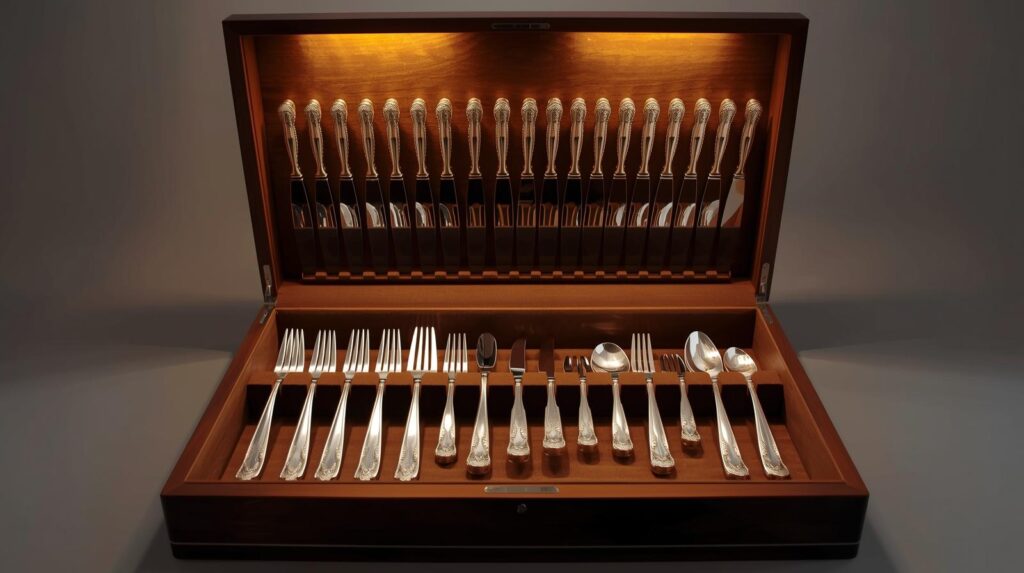
Whenever possible, choose cutlery from one matching set. Consistent shapes, finishes and proportions make the table appear intentional and refined, whether the cutlery is sterling silver, silver-plated or stainless steel.
That said, a perfectly matched set is not essential. If you do not own enough cutlery for a large dinner, combining pieces carefully is perfectly acceptable. Try to keep similar styles together and avoid placing a highly ornate piece beside one with a noticeably modern design.
Good-quality cutlery does not have to be prohibitively expensive. Silver-plated sets can often be found at reasonable prices through online marketplaces, antique markets and charity shops. Portobello Market and similar markets may also reward patient searching, and an attractive vintage set can add considerable character to a formal table.
A Simple Example
Imagine that you are serving asparagus velouté, beef Wellington and a fruit tart.
The soup spoon would be placed furthest out on the right. The main-course fork would sit on the left, with the main-course knife on the right nearest the plate. The pudding spoon and fork would be placed closest to the plate if they are being set in advance, or brought to the table with the fruit tart.
The result is a place setting that guides guests intuitively through the meal without requiring explanation.
Final Table Setting Checklist
Before your guests arrive, check that:
- Forks are on the left of each plate.
- Knives and spoons are on the right.
- Knife blades face towards the plate.
- Fork tines and spoon bowls face upwards.
- Cutlery is arranged in order of use, from outside in.
- The butter knife is placed on the side plate.
- Unnecessary utensils have been removed.
- Pudding cutlery follows the style of service you have chosen.
- The cutlery is aligned neatly and spaced consistently.
Mastering etiquette for table manners is not difficult once these principles become familiar. A thoughtful table setting helps guests feel at ease, supports the rhythm of the meal and demonstrates your care as a host. True elegance does not depend on extravagance; it is found in the small, considered details that make everyone feel welcome.