Your Essential Guide to Summer Office Dress Code
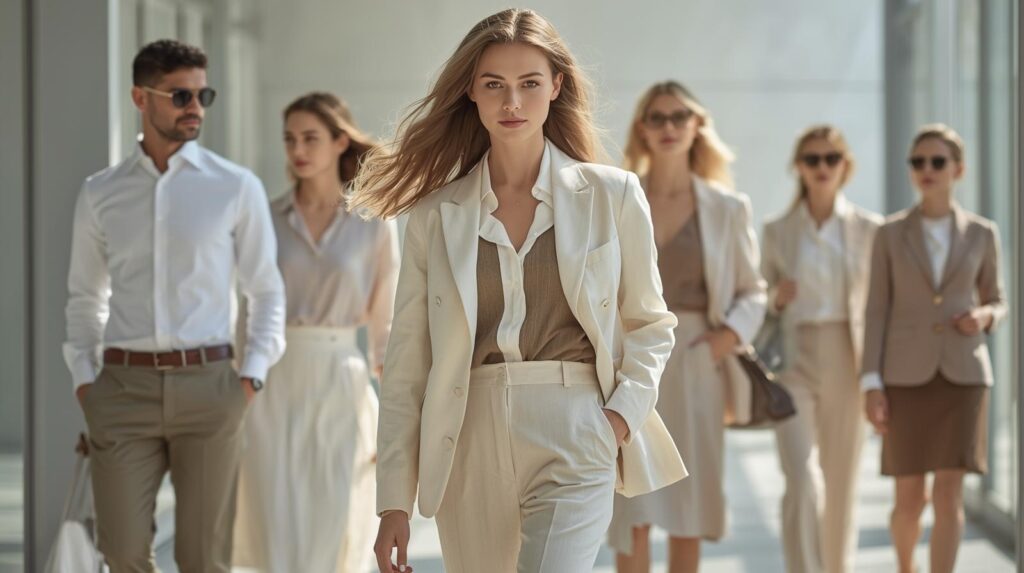
As the British summer sun makes a rare but welcome appearance, the office wardrobe requires a subtle shift. Warmer weather permits greater comfort than the starched suits of winter, yet workplace etiquette demands that one should not sacrifice professionalism for practicality alone. It is perfectly acceptable — indeed, expected — to dress more lightly when the weather turns balmy, for the lighter the conditions, the more relaxed the dress code becomes. The art lies in striking that balance: abiding by the policy, yet remaining comfortable.
This guide offers timeless advice for navigating summer office attire with poise. Whether you are new to a firm or a seasoned professional, observance of these principles ensures you project quiet confidence, whatever the thermometer may say.
Core Principles of Summer Etiquette
Here are 3 dress code tips that will ensure that you should get it right:
- First and foremost, consult your company’s dress code policy. Many offices relax standards slightly during warm spells, but it is wiser to seek clarity than to guess. Also, erring on the side of formality would be a good idea, especially if you are new to the firm.
- Fabrics are your ally: opt for breathable cotton, linen or silk. However, the latter, chic though it may look, is easily creasable and needs a lot of care, not to mention the price tag.. Synthetics that trap heat or sheen unflatteringly should be avoided.
- Comfort is encouraged, but never at the expense of decorum. Arriving in trainers remains unacceptable in most settings (unless your workplace has no dress code whatsoever). Observe colleagues discreetly — particularly if you are new — before introducing informal pieces like polo shirts or jeans.
Guidance for Ladies
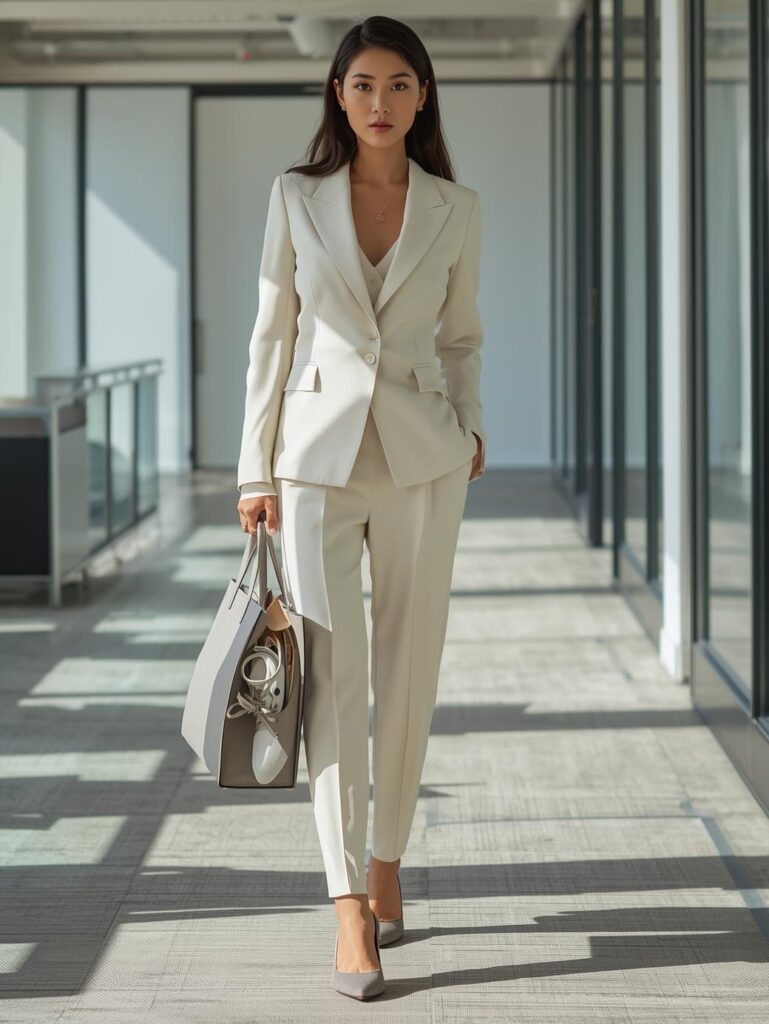
The summer offers scope for lighter, more feminine silhouettes, provided they remain office-appropriate.
However, please remember these general rules:
- Dresses and skirts should reach the knee or just below. Besides, whatever the weather, you are expected to wear tights with your skirt. Sheer materials or visible underwear are to be avoided.
- You may wish to wear trousers and, if your office had a more lenient policy, jeans could also be acceptable, provided that they are classic in style and monochrome. Avoid “character” jeans with holes, embroidery or metallic details in them. Shorts are never acceptable.
- Tops favour tailored blouses or shirts, with short sleeves permissible for ladies in most settings. Roll long sleeves neatly if needed, but steer clear of low necklines or anything remotely casual like T shirts or any sleeveless garments.
- As for footwear, classic high-heel shoes, especially in black or a neutral colour, are always a good idea. They are not always comfortable, though, especially in the summer. This is why many offices allow presentable flat shoes such as ballerinas or simple loafers. However, no matter how comfortable, sandals and trainers are not permitted.
- Accessories remain understated: a silk scarf or a modest piece of jewelry (e.g. a string of pearls) elevates without overwhelming.
- As for your makeup, given that it is the summer season, it should be most understated, for your own comfort. Besides, provocative and excessive makeup does not go down well in an office setting in any season. On the other hand, arriving without any makeup at all may be regarded as too informal.
Guidance for Gentlemen
These guidelines will help you convey authority, while still staying comfortable at work during the summer months:
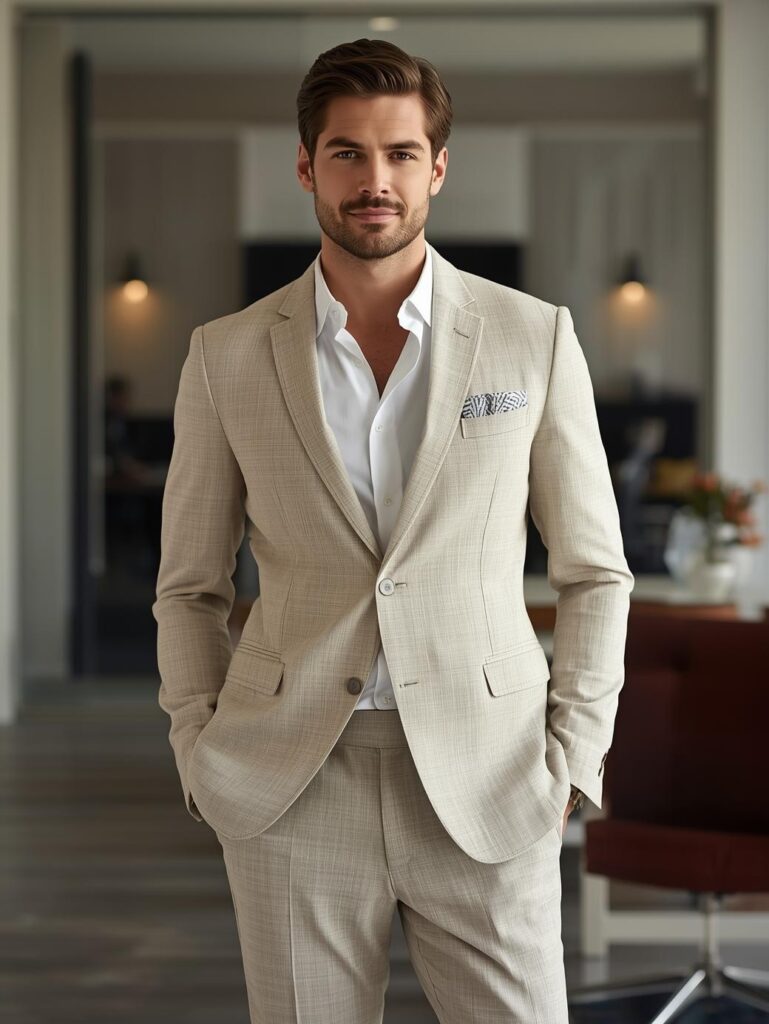
- Although short-sleeved shirts are perfectly acceptable for ladies in most office settings, gentlemen should wear long-sleeved shirts. However, unless you have a very formal business meeting or meeting a client, a jacket is usually optional during the summer. Having said that, it is always a good idea to check your policy.
- Were your company to have a very strict dress code and, therefore, were you expected to wear a suit at all times, there is a tendency to choose lighter coloured suits than you would at other times. For instance, light grey or beige would be entirely suitable.
- Trousers lean towards lightweight chinos, linen blends, or — where permitted — plain navy or black jeans. Shorts are never acceptable, nor are “baggy” trousers.
- Fabric matters a great deal. Steer clear from wool-blended suits (for obvious reasons), as well as from synthetic materials. Even though most offices are equipped with air conditioning, you may still feel hot in your suit.
- Ties become optional in many settings; if required, select silk or fine knits in lighter hues.
- Footwear permits leather brogues, loafers, or derbies — anything but trainers or sandals. Fine cotton socks would complete the look perfectly.
Practical Lifehacks for the Commuter
British summers often involve active commutes, and etiquette accommodates this gracefully.
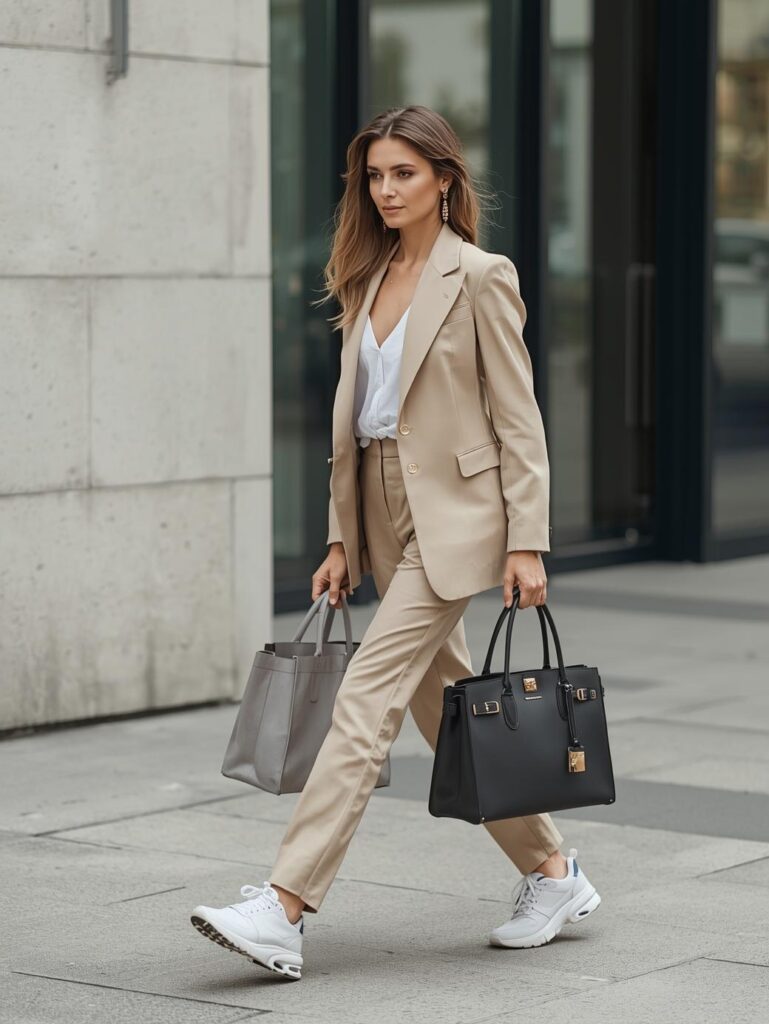
If you walk or cycle to work, it is entirely proper to arrive in trainers or other comfortable shoes and change into more formal footwear upon reaching the office. Stow your trainers discreetly in a bag — a small changing ritual many professionals practise without any confusion.
For lunch-break exercise, such as a brisk walk, you may wish carry a lighter, less formal spare top to swap if needed to avoid stains of sweat. Speaking of which, you may have asked yourself whether dressing formally (and, therefore, not as lightly as you would wish) may imply that you may sweat in the office. Well, the answer to this is that most offices have air conditioning on, especially during the summer. Therefore, sweating need not be a concern. Besides, to feel more comfortable, make sure to keep well hydrated.
Finally, here is a special tip for gentlemen: it may be an idea to wear a long-sleeved shirt with trousers from one of your suits in “normal” times (when you do not have any formal meetings, internal or client). However, I think that keeping a matching jacket in the office (or on a hanger, if you do not have a room of your own) would be ideal, so that you should be able to don it whenever you need it.
Client and External Engagements
When venturing beyond the office — for client lunches or summer networking — elevate accordingly. Lounge suits for afternoon events or smart day dresses maintain British poise. Alternatively, a classic business suit for gentlemen and a formal trouser or skirt suit for ladies would be perfectly acceptable for formal day events, as well as for most evening events, unless black tie (or any other) dress code is specified in the invitation.
Summer office etiquette celebrates comfort without descending into overly familiar territory. By embracing lighter fabrics, practical solutions, and elegant yet professional options, you will ensure that you remain both presentable and at ease. And, as we all know, in business the way you look matters every bit as much as your professional qualities and soft skills. Therefore, dressing appropriately may result in a well-earned promotion, which is always welcome, isn’t it?