
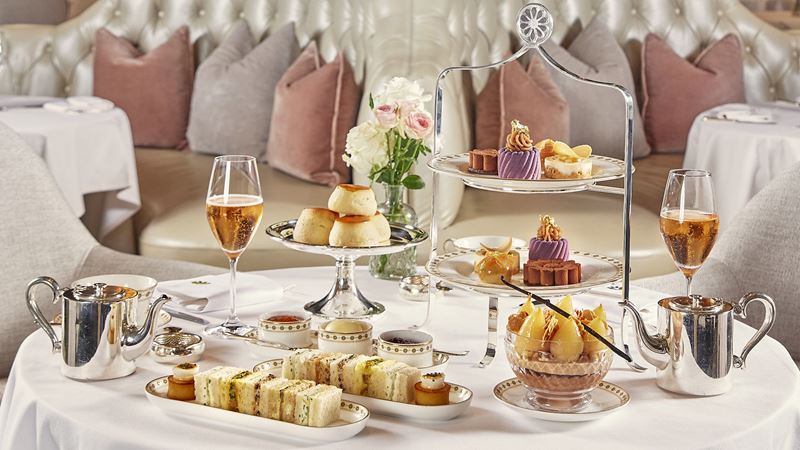
It is said that a true English lady can host an afternoon tea with no more effort than she takes her breath; graceful, unflustered, and entirely in control of everything, from the contents of her teapot to the flow of polite conversation. The truth, of course, is that the perfect afternoon tea requires quite a bit of careful planning, an ounce of taste, and a dash of good humour. Whether you are planning a formal tea for twelve or a friendly gathering for four, the art lies in making it appear effortless — even though your kitchen may tell a different story the hour before your guests arrive.
Afternoon tea is, after all, more than just a meal. It is a ritual — an expression of hospitality, charm, and British sociability at its best. Here are seven essential tips to help you become the perfect afternoon tea hostess — a mistress of calm refinement, delicious sandwiches, and perfectly brewed tea.
1. Create Your Perfect Invitation
The first gesture of hospitality happens long before the kettle even thinks of boiling — it begins with your invitation. Your invitation sets the tone. Is it going to be an elegant gathering in your drawing room, or a breezy tea in your garden surrounded by lavender and gossip? Your chosen words and design should reflect exactly that.
You can send your invitation as a card, a letter or an email. The latter is perfectly acceptable these days, and preferred by most people owing to its efficiency. Besides, a beautifully designed e-card through a service like Canva can look every bit as elegant as fine stationery. But if you have the time, sending a physical card still carries a timeless charm. It might even end up proudly displayed on a mantelpiece.
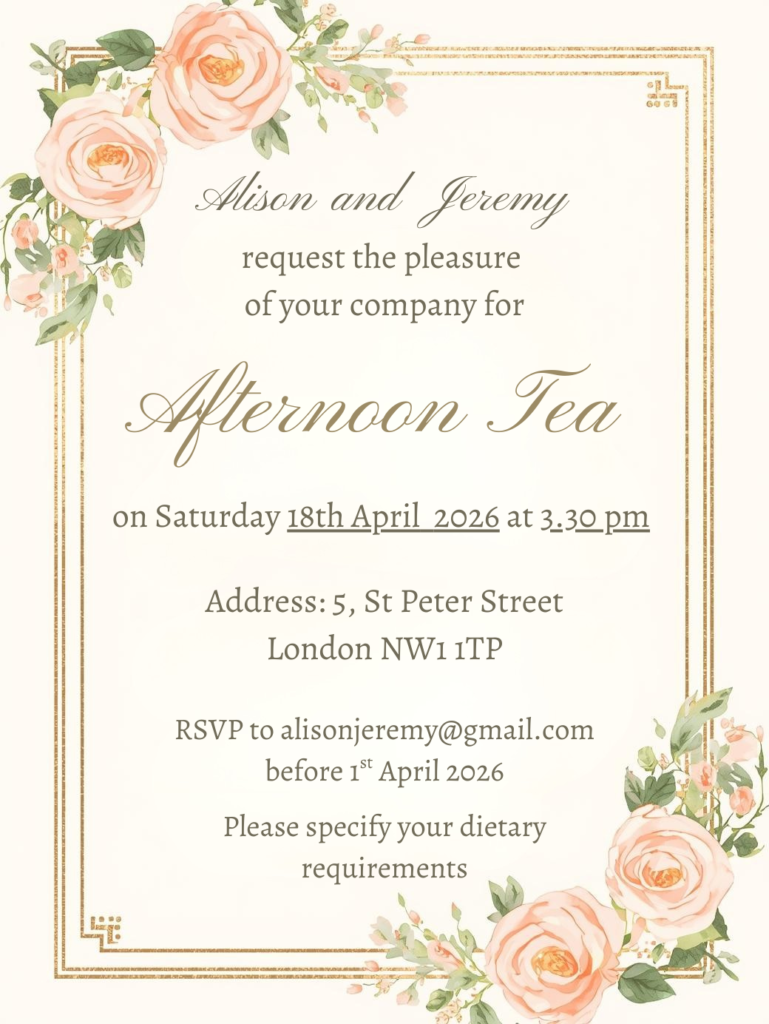
An invitation should include the following details:
- Date — Saturdays and Sundays are preferable, but try to avoid bank holidays, as your guests may have family plans
- Time — The best start time for afternoon tea is between 3 and 4 p.m.
- Your address — Include your full address, including postcode. If necessary, provide your guests with directions.
- RSVP date — Ideally two-three weeks before the event. This gives you time to prepare your seating plan, order enough tea and food and avoid last-minute stress.
- Dietary Requirements — This is essential because it is vastly preferable to know your guests’ dietary needs in advance to discovering them “on the spot” and watching them politely decline every item of food…
- Timing: Send invitations four to six weeks in advance. It gives your guests enough time to plan outfits, hair appointments, buy a lovely gift for you (a charming thought?) and fabricate social alibis for declining less appealing invitations!
Mentioning dress code is optional, but please note that the by-default dress code is smart casual.
2. Consider the Seating Plan
Tea parties may seem light-hearted, but seating is serious business. A hostess with the ability to place the right people together could rival any tactful politician.
A useful rule of thumb: couples should be separated. This isn’t marital sabotage — it simply prevents insular conversation. The purpose of tea is to mingle and engage, not to spend the afternoon whispering to the person you already share a mortgage and children with.
Traditionally, the host (if there is one) heads the table by the side of the door, while the hostess heads the opposite end.
Bear in mind that many afternoon teas have a majority of women, so conversation should flow naturally around shared interests. Try to seat guests with something in common — travel, theatre, literature, mutual friends, etc.
If you’re hosting eight or fewer, place cards are optional; but for more than eight, they are indispensable. No one needs the confusion of musical chairs around a tea table.
Lastly, resist the temptation to seat your best friend next to yourself, because your attention should be equally divided between guests. Keep your right-hand seat for a guest who might be new to your circle — someone who could use a little help joining the conversation.
3. Choose the Right Tea
Now, to the backbone of the affair: tea itself, the liquid gold that melts every British heart.
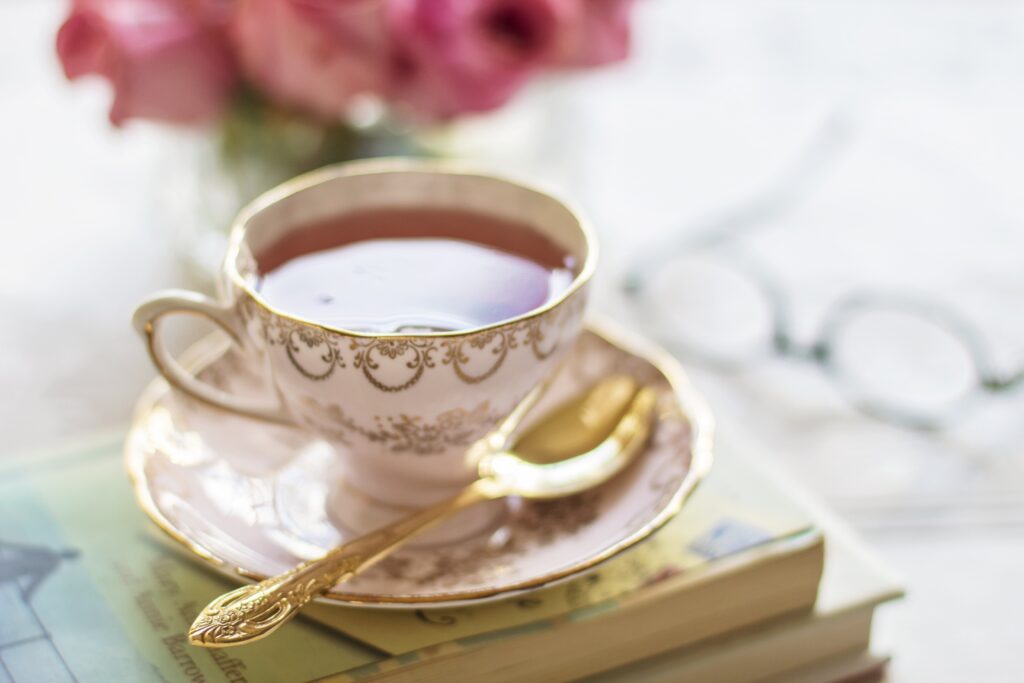
If hosting at home, loose-leaf tea only, please. Tea bags, while convenient, simply do not possess the same dignity. Offer two types of tea — one black, one green or herbal. This variety caters both to the traditionalist and the health-conscious modern guest.
Classic Black Teas:
- Assam: Strong, malty, and full-bodied — perfect with milk.
- Earl Grey: Fragrant and aristocratic, scented with bergamot oil. It’s the Duchess of teas. Better enjoyed without milk
- Lapsang Souchong: Smoky and dramatic, like a gentleman in a tweed suit. Not everyone’s taste, but unforgettable.
- Darjeeling: Often called the “champagne of teas” — delicate, floral, and best served without milk.
Green / Herbal Teas:
- Gunpowder Green: Rolled leaves with a fresh, slightly smoky flavour — ideal for a punchy palate cleanser.
- Japanese Sencha: Smooth, grassy, refined — the kind of tea that gives a sense of wellbeing and virtue.
- Gyokuro: Precious and subtle, this emerald-green brew is perfect if you’re feeling luxurious (and generous!).
- Oolong: Halfway between black and green — complex and lightly toasted, for your more discerning guests.
- Peppermint: Refreshing and cooling, especially after rich cakes.
- Camomile: Gentle, floral, and ideal for calming nerves, perfect for a relaxing event, such as afternoon tea.
- Fruit Teas: From strawberry to hibiscus, these add colour and fragrance.
Prepare your teas with precision: fresh water, boiled at the right temperature (100°C for black tea, 80°C for green tea, 60°C for very fine green tea, such as Gyokuro, 100°C for white tea, herbal tea and fruit tea).
4. Lay the Table Like a Pro
A beautifully laid tea table whispers hospitality before a word is spoken.
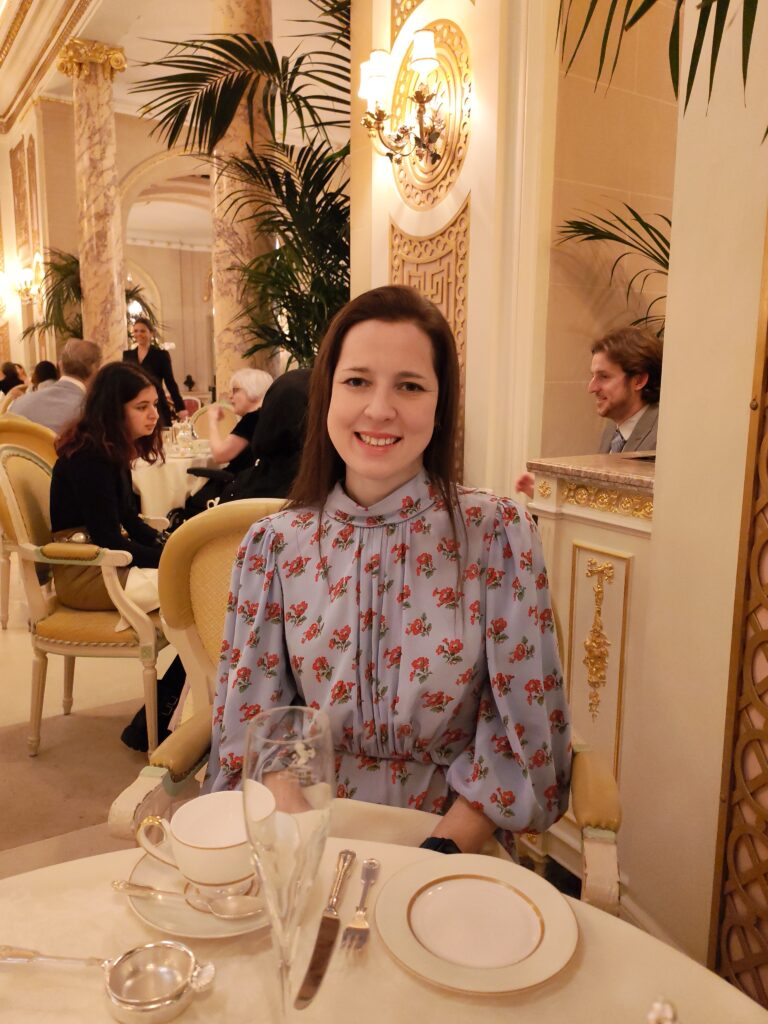
Start with essentials: no mugs, only cups and saucers, preferably fine bone china but please don’t go over the top. More ordinary cups and saucers would be perfectly suitable. The layout should be elegant but relaxed; this is tea, not a state banquet.
On your table, include:
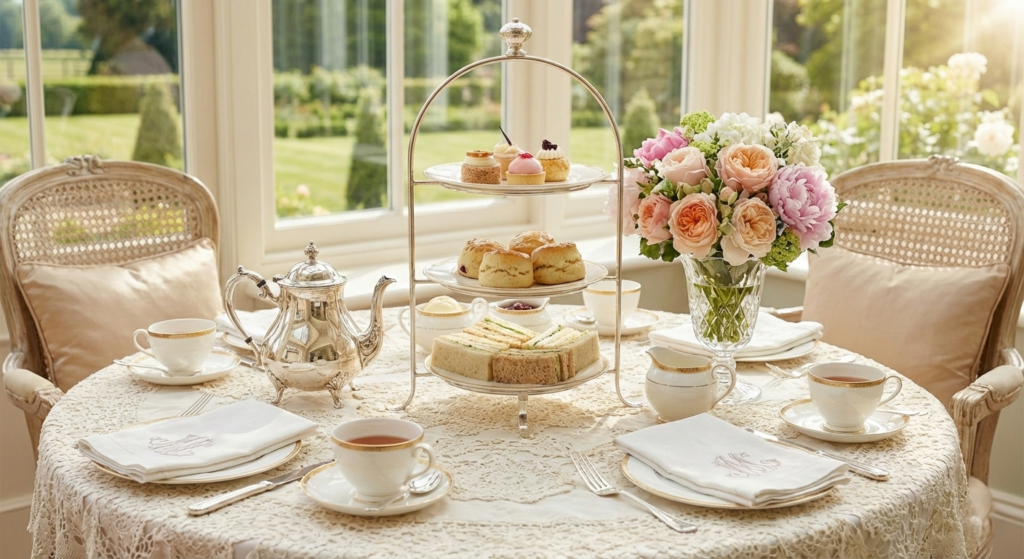
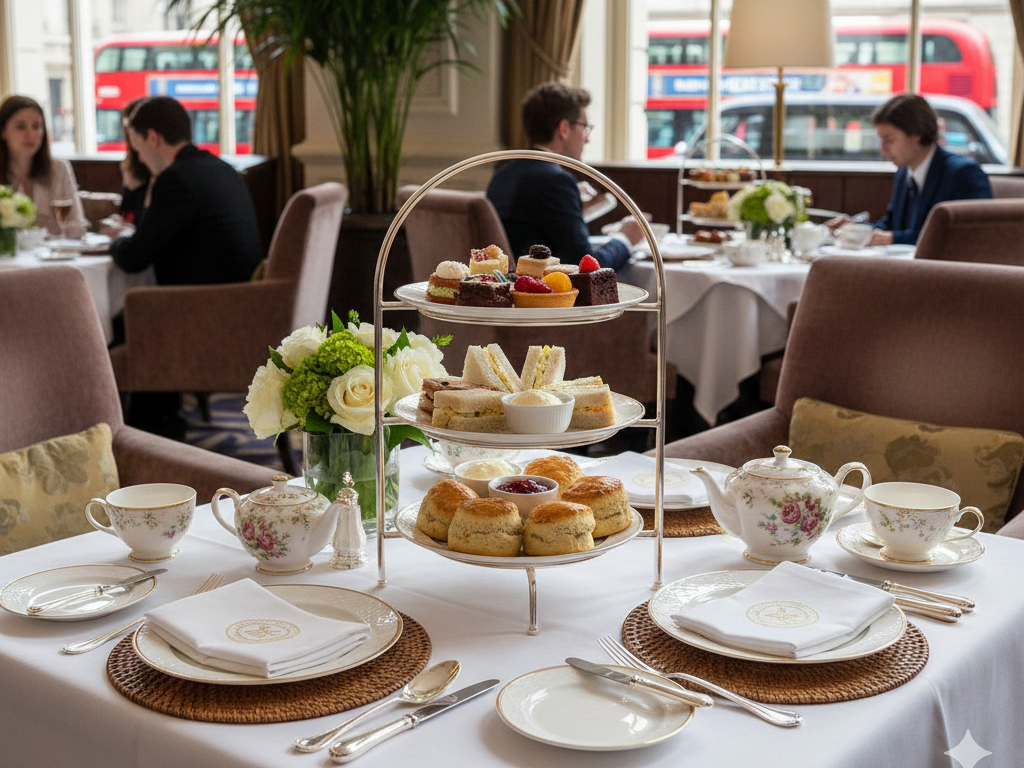
- An afternoon tea stand (three tiers, naturally): bottom tier for sandwiches, middle for scones, top for cakes.
- Bowls of clotted cream and jam, each with its own spoon.
- Teapots — ideally one per tea type. Avoid thermoses or pouring straight from the kettle; you’re not in the office.
- Strainers — enough for each pot offered. There’s nothing worse than chasing one down the table mid-pour.
- A milk jug and a sugar bowl — both positioned within easy reach.
Place settings should include:
- A dessert plate
- A napkin (folded neatly to the left or placed on the plate)
- A fork (left) and a knife (right)
- A cup and saucer with teaspoon placed on the saucer
- A champagne flute (optional, if serving Royal Tea — slightly left of the teacup)
Finally, it is preferable to have some flowers on the table.
And do remember — matching sets are optional. An eclectic mix of china can be utterly charming. A Wedgwood teacup beside your grandmother’s floral plate? Perfection!
5. Think Carefully About the Food
Let’s be honest: some guests will come primarily for the food. And who can blame them? Even the most spirited conversation goes down better with a well-cooked scone.
First, accommodate dietary needs, for which you may wish to read your guests’ RSVP emails carefully. Gluten-free, vegetarian, dairy-free and vegan options exist for ALL afternoon tea treats.
As you may know, there are three “courses” of afternoon tea treats: finger sandwiches, scones and cakes. Let us cover them one by one.
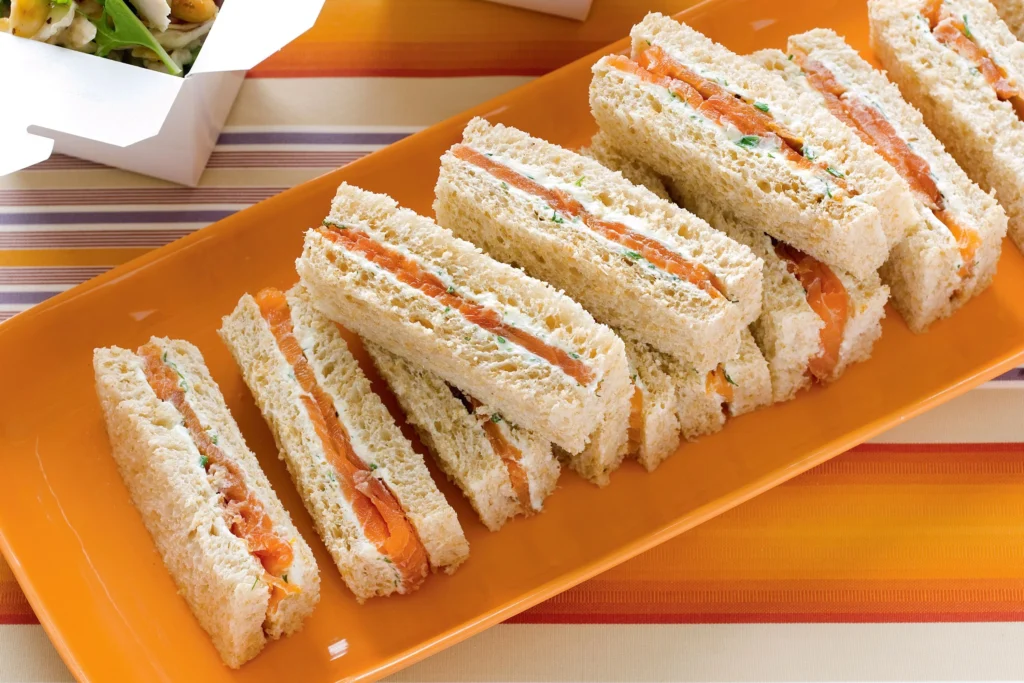
Traditional choices for finger sandwiches:
- Cucumber and cream cheese
- Smoked salmon with cream cheese
- Egg mayonnaise with cress
- Ham and mustard
- Coronation chicken
Crusts are neatly trimmed off, and sandwiches cut into fingers or triangles — your choice, but uniformity is key.
Scones
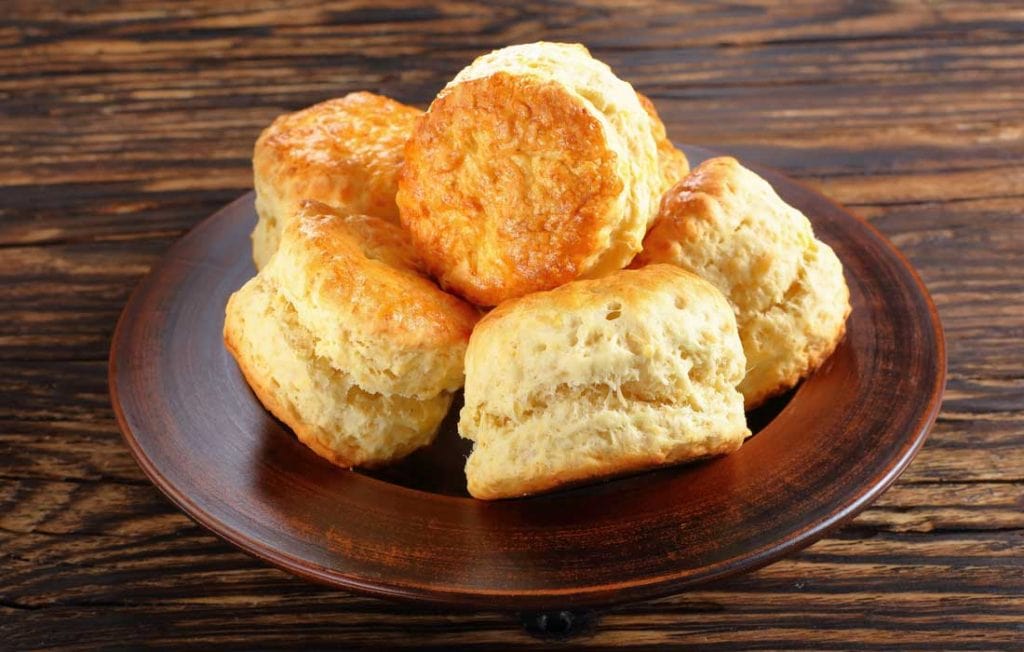
Offer plain and fruit varieties. Warm is best, but not hot enough to melt the cream. Serve with clotted cream and jam of your choice. You may even wish to serve them with two types of jam / marmalade (e.g. an orange marmalade and a raspberry jam) to offer your guests more choice. The clotted cream and jam should ALWAYS be presented in small bowls, NEVER in their original packaging (be it jars or, worse, plastic).
Cakes
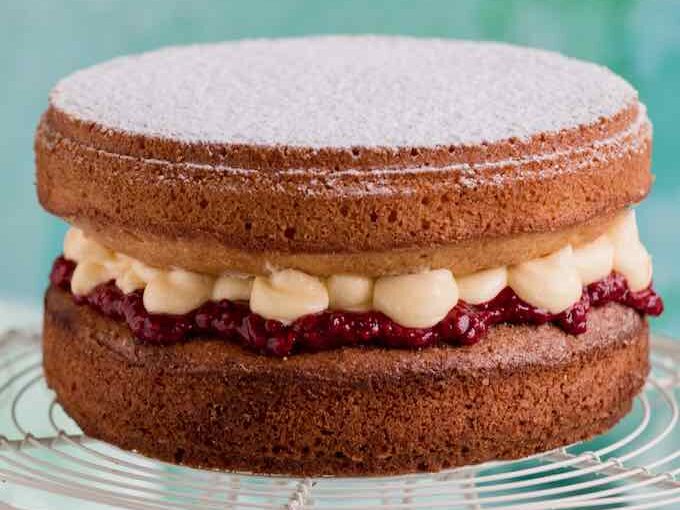
If fewer than eight guests are attending, one large centrepiece cake will suffice — something classic like a Victoria sponge, a carrot cake or a chocolate cake. Over eight, it’s far better to have variety — perhaps a cheesecake alongside a classic fruit cake or a tray of petits fours.
If you are an experienced baker, showcase your best recipe. But this is no time for experimentation — better a bought cake than a burnt masterpiece!
6. Dress Elegantly — But Keep It Daytime
Even the best cake can be “outshone” by the wrong outfit. Afternoon tea is about elegance with ease — refined, but not theatrical.
Your suggested attire (possible options):
- Smart day dress (knee length or midi)
- A casual long dress
- A flowing skirt with a blouse, or a trouser suit
Your shoes should be polished, but high heels not obligatory. It’s a daytime event, not an opera gala!
Having said that, please do not go to the opposite extreme. So, no jeans, trainers, or sweatshirts, please. If your outfit could accompany a dog walk, it is probably not right for afternoon tea.
Hair and makeup ought to be understated. Think “neatly brushed and glowing,” not “I’m attending a BAFTA ceremony!” A string of pearls or delicate earrings would add charm without excess.
Guests won’t remember your designer label, but they will remember that you looked entirely appropriate and comfortable — the true mark of a perfect lady.
7. Maintain Polite and Engaging Conversation
Now that everything looks perfect, comes perhaps the trickiest part — ensuring that conversation is as smooth as your Darjeeling.
Remember: as hostess, you are the sun around which all topics orbit. Good conversation should be inclusive, light-hearted, and never controversial.
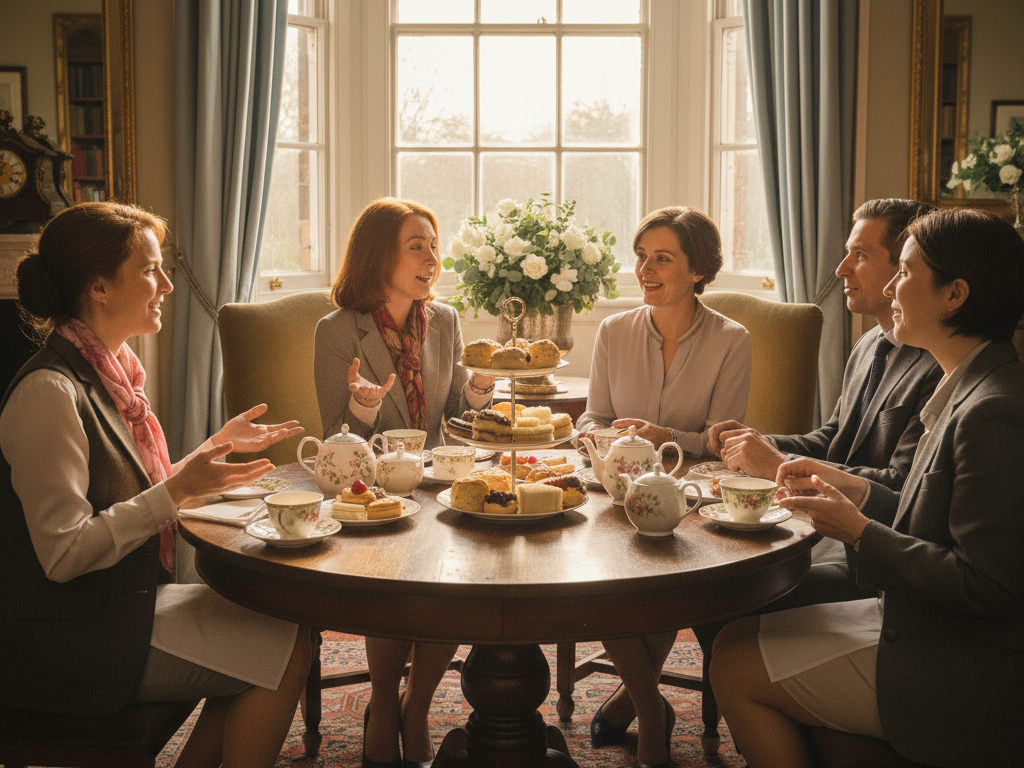
Safe (and delightful) topics include:
- The weather (no subject more British!)
- Travel plans and past holidays
- Theatre, music, or recent cultural events
- Books or upcoming exhibitions
- General news (but not political ones, please)
- Light personal updates
Use open questions to keep dialogue natural:
“What have you been up to recently?”, “Have you seen the new Noel Howard play?”, “What are you reading at the moment?”
These invitations to share feel effortless, yet show genuine interest.
Also, there are topics to avoid completely, which are politics, religion, money, health, and… sex.
Should the conversation flag (it happens to the best of us), bring out the universal saviour — humour. You may wish to say something like: “There are as many political views as there are types of cakes for afternoon tea, but the difference is… there is no pleasure in politics. By the way, Jemima, would you like another slice of my carrot cake?”
The perfect afternoon tea hostess combines grace with planning, humour with decorum. It isn’t about perfection, but about creating a small world of civility and pleasure for a few sacred hours. Hosting a flawless tea is, in truth, a labour of love — one that harks back to a slower, more gracious rhythm of life. But it needn’t be intimidating. With these seven steps — a thoughtful invitation, clever seating, properly brewed tea, artful table setting, appetising treats, elegant attire, and sparkling conversation — you’ll have all the makings of an afternoon to remember.
Courtesy is not about performance — it’s empathy in action. Make everyone feel valued, seen and at ease, and you’ll have done your job beautifully. And when your guests depart declaring, “What a perfectly lovely afternoon,” you can smile serenely — and finally enjoy the last cup of tea with a treat that you’ve secretly kept just for yourself!
To learn more about afternoon tea etiquette, discover my book “Afternoon Tea Etiquette”!