An exclusive insight into the world of etiquette with a Downton Abbey star!
It was one of those thoroughly gloomy, soaking-wet November days, the sort of afternoon where one’s best umbrella feels woefully inadequate, and the mere thought of arriving at a gentlemen’s club to interview a Downton Abbey star looking spick and span sounds too good to be true. Besides, I have a confession to make: one of my beloved leather gloves was lost somewhere on the tube, which made matters only worse, especially given the fact that my husband and I had moved home the day before (literally!) and I wasn’t sure where I had packed my other gloves.
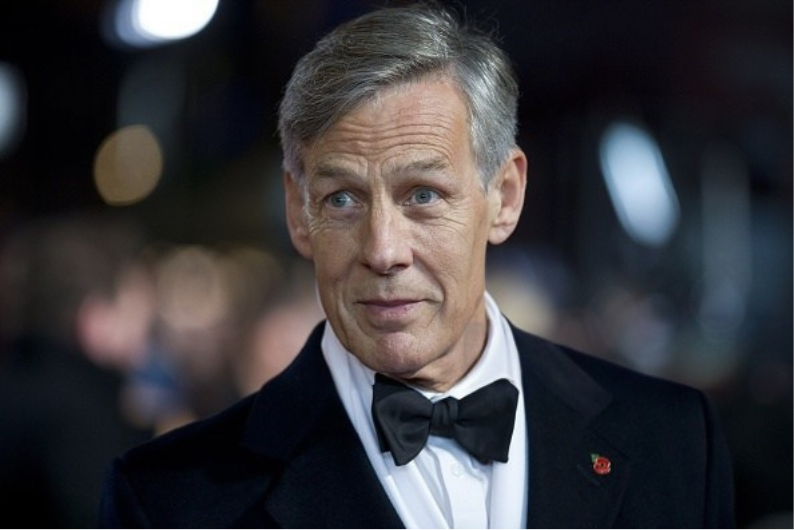
Anyway, all those troubles had only exacerbated my zeal to arrive at the club on time (not that I still wasn’t a couple of minutes late!), not just because it was nice and dry there but, most importantly, because I was so much looking forward to my conversation with Douglas Reith, the actor who portrayed Lord Merton in Downton Abbey. And, I have to say, the conversation was most enjoyable, because Mr Reith definitely embodies the very essence of English gentility. Born into ‘polite society’ himself, he seemed to require no fictional costume to convey breeding and grace. On the contrary, it looked like he was a man who was simply playing himself!
The subject of our discussion was “Etiquette in Downton Abbey”. As an etiquette consultant, I was keen to gauge the depth of the commitment to manners on set and to gain his insight into the historical accuracy of that gilded, yet strictly regimented, world.
Mr Reith welcomed me with the warmth and unhurried charm one might expect. He began by expressing his great delight in having been part of the Downton phenomenon, a series that captured the imagination of the nation and of the world with its meticulous portrayal of a vanished age. But did they, I wondered, truly get it right?
The Devil is in the Dining Details: An Obsession with Accuracy
My first question was whether or not he, a man to whom good manners are as natural as breathing, felt that the production’s depiction of Edwardian etiquette was accurate?
“Emphatically so,” Douglas Reith confirmed. The meticulousness with which the creative team approached the subject was, he recounted, most punctilious. This wasn’t merely a vague attempt at period drama; it was an archaeological dig into the minutiae of social conduct.
The primary focus, inevitably, was on the magnificent, if occasionally terrifying, dinner table. For the Downton family and their guests, dinner was not merely a meal; it was a highly choreographed, high-stakes social performance.
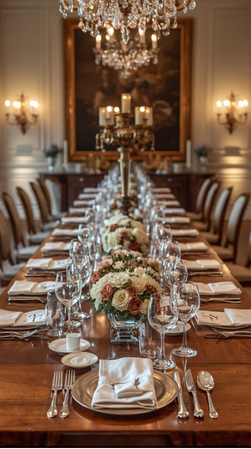
- The Soup and the Spoon: Every morsel, every movement, was scrutinised. The way one eats soup, for example, which, for the record, should be ladled away from the body, an old tradition to prevent drips on one’s evening attire.
- The Conversation Carousel: He detailed the exacting, and now largely obsolete, rule of conversation at a formal dinner. One was expected to dedicate the first part of the meal to the person on one’s
- left, and the second part to the person on one’s right. A failure to balance this conversational
- obligation would have been perceived as a significant social slight.
- Cutlery and Seating Plans: The precise holding of the knife (no pen-like holding, please) and the complexity of the seating plan, which placed couples strategically apart, all required careful attention.
It is clear that the set was less a place of creative freedom and more a laboratory for historical perfection. The commitment to accuracy, Mr Reith noted, was relentless.
White Tie and White Gloves: The Costumes of Constraint
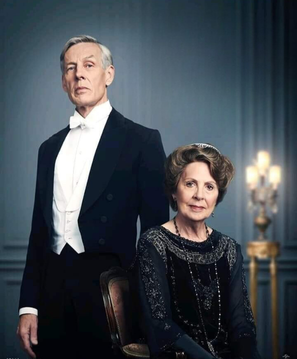
Beyond the dining room, immense attention was paid to dress etiquette, which, in the Edwardian era, dictated one’s attire for almost every hour of the day. Douglas Reith shared a telling anecdote: on one occasion, when he was wearing a Guards tie, the director insisted on a slight adjustment to ensure the red stripe appear before blue.
But the formality, he argued, served a purpose beyond mere aesthetics. He suggested that the formal attire itself acted as a living, breathing etiquette guide.
“If you were wearing white tie,” he explained, “you had to keep upright. The sheer architecture of the costume demanded a good posture. It was an enforced elegance.”
The sheer inconvenience of Edwardian clothing was, in fact, a mechanism of maintaining a strict social code.
Mr Reith then offered two delightful tidbits regarding accessories:
1. Hats Off to Propriety: For a gentleman, a hat was worn when moving—walking or in a carriage—but was strictly forbidden indoors. Furthermore, when greeting an acquaintance, one was expected to raise one’s hat or, at the very least, to touch the brim in acknowledgment. A simple gesture, but one that spoke volumes about respect.
2. Gloves as Germ-Barriers: For the ladies, gloves were more than just a fashion statement. In an era where hygiene was not as advanced as it is today, gloves served as a practical form of protection against the spread of illness. The elegance was, quite literally, a barrier.
The Brigadier of Behaviour: Alastair Bruce
Such incredible attention to detail does not happen by accident. I enquired about the guiding hand behind this authentic portrayal. Mr Reith was unequivocal in his praise for the show’s official historical advisor, Brigadier Alastair Bruce.
“He was an extremely good choice,” Mr Reith stated. “He is very authoritative on the subject.”
Bruce, a man steeped in the traditions of the British Army and polite society, provided the production with an unimpeachable source of knowledge. The icing on the proverbial cake? Douglas Reith mentioned, with a slight twinkle, that Brigadier Bruce was distantly related to Lord Carnarvon, the current resident of Highclere Castle—the very house that stands in for Downton Abbey.
The Accuracy Test from a Beloved Family Member
Mr Reith’s personal connections to the era offered a unique litmus test for the show’s accuracy. He was very close to his grandmother, who was a young woman during the Edwardian era and, crucially, a lady who remembered the times clearly.
So, did his grandmother’s memories align with the Downton script? “Interestingly, yes,” he replied. “Downton Abbey was fairly accurate”. This confirmation, coming from a man whose family history bridges the gap between the fictional world and historical reality, is perhaps the highest compliment the series could receive.
The Ring Revolution
In discussing the differences between the Downton era and the present day, Douglas Reith provided an interesting fact regarding the simplest of symbols: the wedding ring for gentlemen.
Although it is common sight today to see a man wearing a gold band, this was not the done thing for gentlemen in the Edwardian era.
“The tradition of gentlemen wearing a wedding ring on the ring finger of their left hand started during the First World War,” he revealed. “It was so that they should remember their wives, which would give them comfort on the battlefield.”
It is a poignant reminder that even the most seemingly timeless traditions can have roots in moments of profound upheaval.
The Quality that Shapes a Modern Gentleman
Despite his aristocratic background, Mr Reith was keen to stress that he was not raised with the stringent, almost suffocating, Edwardian values. He was born in 1953, by which time the world had changed, and his family adapted with grace and foresight.
The oft-quoted Edwardian decree that “children should be seen but not heard” did not particularly apply in his loving, supportive childhood environment. Unlike the fictional Crawley children, who spent most of their time sequestered with nannies, Douglas Reith spent a significant amount of time with his mother, although he had a nanny whom he liked very much.
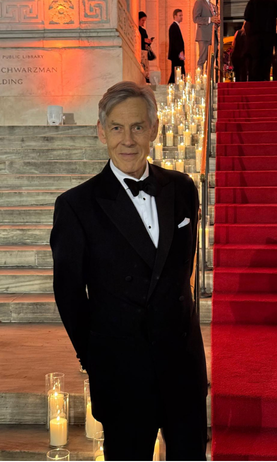
Besides, Mr Reith stated that kindness was the main value that shaped him. To illustrate this point, he gave the example of his father, whose entire male line had been in the army, yet when Douglas Reith expressed a wish not to join up and go into acting instead, his father simply said that he didn’t mind it at all, explaining that “there was no romance left in the army”. Furthermore, he recalled his father saying “I am happy if you are happy”. This freedom of choice he appreciated deeply, demonstrating a familial ethos far more enlightened than the era Downton Abbey depicts.
This gentle upbringing, however, did instil in Mr Reith the fundamental rules of social conduct, which are now second nature to him. For instance, he noted that even today, correct pronunciation of aristocratic surnames and titles—such as Buccleugh (pronounced bə-KLOO)—is essential knowledge he had learnt from his early years.
One Notable Objection to the Edwardian Ways
While Mr Reith expressed great happiness with nearly all the ways of life portrayed in Downton Abbey, he did voice one notable exception: the hunting. Although he recalled that his forebears would hunt “anything that moved”, he admitted to being a great animal lover, who holds a strong belief that no living creature should be deprived of its life. His support for Sir David Attenborough’s philosophy—that all living creatures deserve a happy life in their natural environment—revealed a thoroughly modern and compassionate sensibility that would have been far less common a century ago.
The Trickle Effect: Up, Down, and Across the Class Divide
Downton Abbey brilliantly explores how the manners of the ‘upstairs’ world were mimicked and adopted by the ‘downstairs’ staff. But what about the reverse? Could the manners of the servants, the downstairs world, ever ‘trickle up’?
Mr Reith conceded there may have been a touch of that, citing the excellent example of Tom Branson, the former chauffeur who marries Lady Sybil Crawley. Branson, despite not having the same background, never bowed and scraped. While Tom adapted by dressing and behaving appropriately, Mr Reith pointed out that the aristocratic Crawley family also needed to adapt to Tom’s ways, namely by taking his ideas about managing the estate seriously, in order to truly get on with him. Etiquette, it seems, is a two-way street, even in the most stratified of societies.
Regarding the matter of foreign visitors, such as the Turkish diplomat or Lady Grantham’s American family, Mr Reith confirmed that, according to the narrative, it was unequivocally the foreigners who had to adapt to the stringent English rules, rather than the other way round.
The Enduring Legacy of Edwardian Elegance
In conclusion, I asked Mr Reith about the enduring relevance of Downton Abbey in modern Britain. Does a show about a vanished age still define a part of Britain today?
He believes that, to a degree, it does. Highclere Castle itself, he reminded me, is still very much a working farm today, mirroring the evolution seen in the show (such as Lady Mary’s eventual involvement with pigs in the 4th series).
Furthermore, the very existence of the filming—as the family of Highclere Castle happily allowed, echoing the storyline of the film Downton Abbey: A New Era—shows a pragmatic, modern approach to preservation.
But most importantly, he sees a continuity in the national character. Britain, he believes, is still a country where politeness and proper behaviour matter a lot. While we may not put on white tie every evening (thank goodness!), the formality of the Edwardian dinner survives in quite a few places, notably gentlemen’s clubs and luxurious hotels. The only significant difference? Today, you
are usually served by the waiter, rather than helping yourself from a tray that is brought to you, as was the practice in the Crawley dining room.
The Three Rules and the Ultimate Command
When asked to distil the vast world of etiquette into its core purpose, Douglas Reith offered a beautifully succinct set of commands, timeless advice that would help many of us in today’s fast-paced world:
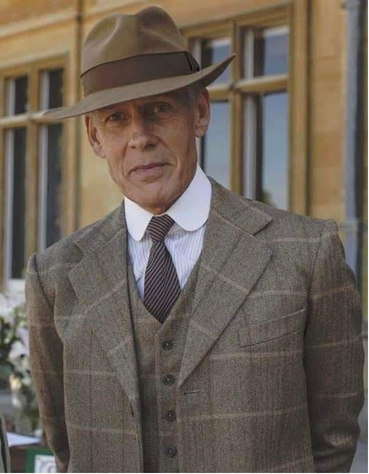
- Never lose your temper in public.
- Never be rude.
- If anyone is rude to you, walk away.
Additionally, when I asked him what the most important etiquette advice he has ever received was, Mr Reith quoted his beloved father:
“Whoever you meet, no matter who they are, if they are a somebody, treat them as a nobody, and if they are a nobody, treat them as a somebody.”
Indeed, Mr Reith believes that aspects such as table manners, seating plans, and dress code, while very important, take a distinct second place to kindness, a quality that, according to Lord Merton, makes you a gentleman or a lady. When asked if he would transgress a rule of etiquette for the sake of kindness, his answer was an immediate and firm, “Yes”.
He recalled a scene in a film where an officer had made a serious dining etiquette mistake, and, rather than letting him suffer, the other officers immediately followed his error, creating a temporary, deliberate chaos so that the first man should not be embarrassed. It is a brilliant illustration of how the spirit of the law should always trump the letter of the law.
The Art Lost in Today’s World
Finally, I asked if there was a particular etiquette rule he misses in today’s more casual, egalitarian world. Without hesitation, Mr Reith mentioned the simple act of a gentleman opening the door for a lady.
He acknowledged that, with the welcome emancipation of women, this gesture is not always received positively today. However, he misses the pure, uncomplicated courtesy of the act. It is a charming sign that even a pillar of traditional society understands that etiquette must move with the times, even if we occasionally mourn the loss of a beautiful, small gesture.
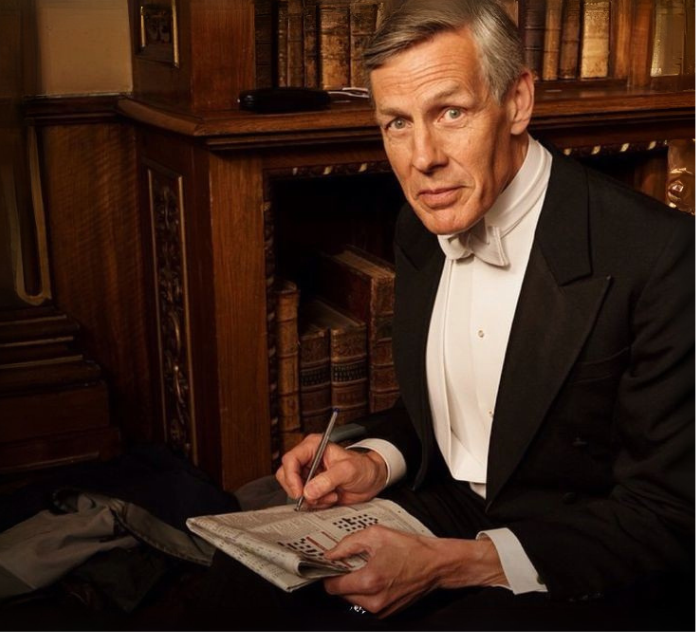
The most important takeaway from our encounter, however, was not the correct way to hold a knife or the proper pronunciation of an aristocratic family name. It was the emphasis, stressed by Douglas Reith through both his upbringing and his work on screen, that at the heart of all good behaviour lies a single, irreducible quality: kindness.
The true mark of a gentleman, or indeed a lady, is not the flawless execution of a social code, but the grace and humanity with which one treats others. Everything else, quite frankly, is just details.