

A wedding seating plan is often the most delicate part of reception planning. Even the most experienced hostess can find that a seating plan for wedding guests requires the skills of a diplomat: balancing personalities, language barriers, family dynamics and the all-important order of preference. On the other hand, it is definitely worth it because a well-considered wedding table seating chart helps everyone feel comfortable, included and free to enjoy your celebration.
Traditional Top Table Etiquette
The traditional British wedding seating arrangement for the main table, read from left to right as guests face it, is:
- Maid of honour
- Groom’s father
- Bride’s mother
- Groom
- Bride
- Bride’s father
- Groom’s mother
- Best man
This arrangement places the couple at the centre, alternates the two families, and positions the maid of honour and best man at either end. It remains a useful starting point for a classic seating arrangement wedding plan, though it should always be adapted to your family’s circumstances.
Modern couples often modify the top table to include step-parents, children, close friends or a larger family group. Some choose a sweetheart table for the couple alone, while others place parents at separate host tables nearby. The essential principle is that both families feel equally honoured.
Creating the Other Tables
Once the top table is settled, turn your attention to the wider wedding seating arrangements. The following guidelines will help you create a balanced and gracious plan:
- Separate couples where possible. This encourages guests to meet new people and prevents the reception from becoming a series of private conversations.
- Aim for an alternating arrangement, ideally boy / girl / boy / girl, where appropriate and comfortable for your guest list.
- Avoid placing a partnered man beside a single woman, or vice versa, as this could cause jealousy or discomfort for their partners.
- Group guests by shared interests. Classical-music lovers, university friends, colleagues often make natural table companions.
- Respect language and culture. If many guests speak French, for example, you may group them together—but ensure at least one English speaker is present if speeches and announcements are going to be English.
- Be sensitive to financial differences. Avoid seating a guest of considerable wealth beside someone who may not boast the same financial stability and might, therefore, feel uncomfortable. Every guest is equally welcome and equally important.
The Most Popular Seating Dilemmas
Before creating your seating plan wedding layout, it helps to acknowledge the questions that trouble almost every couple:
- “I have to place my father next to my fiancé’s mother, but they argued at our engagement party over the wedding budget. What should I do?”
- “At a small wedding, I need to separate couples, but Ms X and Mr Y used to be “an item” and their current partners may not welcome them sitting beside one another.”
- “Our wedding is Jewish and Christian. My mother is devoutly Jewish, while my fiancé’s father is a practising Catholic. How can we prevent an argument?”
- “There will be guests with opposing political views, but I have to place them together. What should I do?”
- “My parents speak only Spanish and my fiancé’s parents speak only English. How will they communicate?”
These concerns are entirely understandable. A seating chart for weddings is not merely a matter of placing names around tables; it is about creating an atmosphere in which people feel at ease.
Reassuring Principles
First, remember that this is your wedding day. Provided your family and guests have tact and emotional intelligence, most of them will be willing to set aside their personal differences for a few hours and focus on neutral, pleasant conversation.
Secondly, personal circumstances should take precedence over rigid rules. If the bride’s parents speak only Spanish and the groom’s parents speak only English, it is perfectly acceptable to make an exception and not separate couples in this case. You might seat the two sets of parents together. Another idea would be to place some other Spanish-speaking guests next to them.
Finally, remind yourself—and, if necessary, gently remind others—that there are five subjects best avoided at the table: religion, politics, money, health and sex. If those topics are set aside, there should be little scope for disagreement. And if someone chooses to create unpleasantness despite your careful planning, you cannot be held responsible for that.
Practical Presentation
A beautiful wedding seating plan deserves an equally practical presentation. Display it on an easel near the entrance, clearly showing table numbers or names so guests can find their places without delay. If you wish to make your wedding seating plan presentable, we can do that for you, please follow this link.
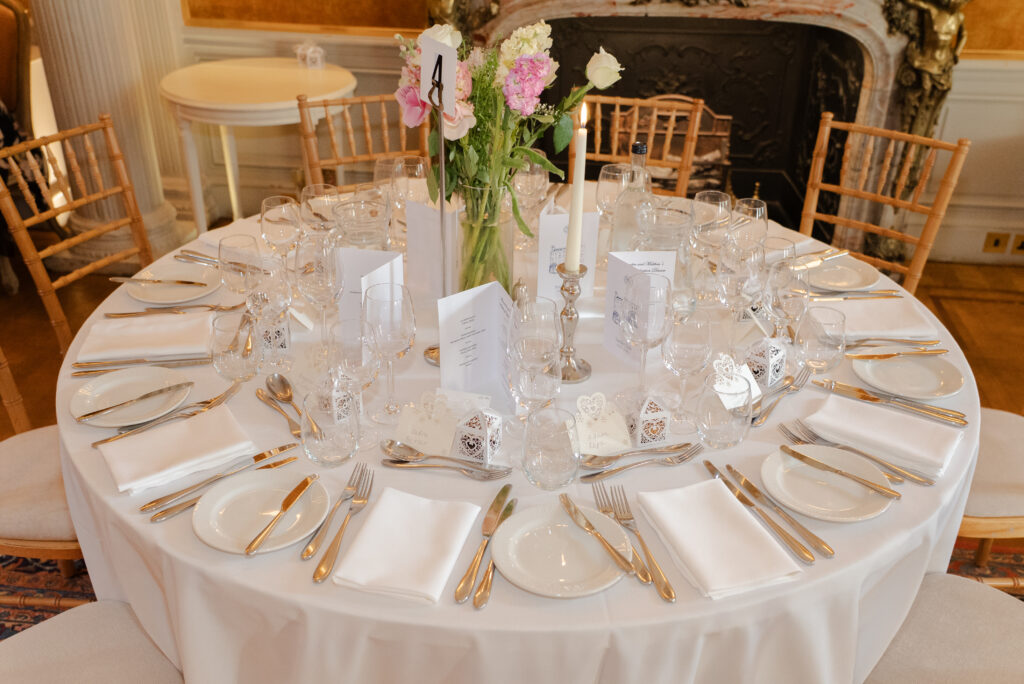
You may also wish to consider numbering your tables or giving them names. For a flower-themed wedding, for instance, you might choose The Rose Table, The Tulip Table and The Orchid Table. Whichever style you select, make the signage elegant, legible and consistent with your overall wedding stationery.
Children at the Reception
If children are invited, a dedicated children’s table is invaluable. Seating there can be more flexible, allowing young guests to sit with friends and cousins. However, always arrange for a responsible adult supervisor, if only in order to solve the inevitable disagreement over the largest piece of cake!
A wedding seating plan need not be a source of dread. Begin with the people who require the most careful consideration, adapt tradition where kindness and practicality demand it, and remember that your guests have come to celebrate you. With thoughtful wedding seating arrangements, a gracious menu and a clear seating chart, you will create a reception in which everyone feels considered, comfortable and genuinely welcome.
Still dreading your wedding seating plan? We will do it for you. Please follow this link to see all our seating plan arrangement services!